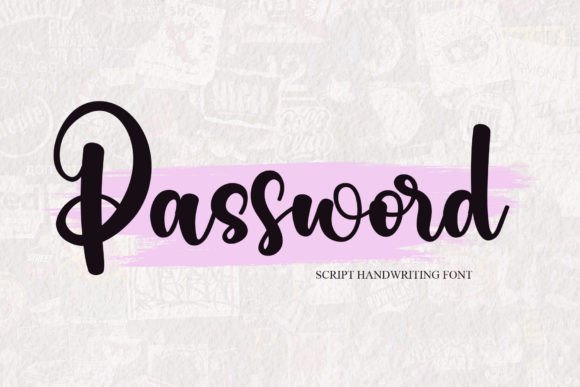
Password: A Stylish Handwritten Font That Elevates Brand Identity
Revamping Our Bakery Packaging with Password
As a small bakery owner, I’ve always believed that presentation matters. When we decided to refresh our packaging to reflect our warm, artisanal vibe, I knew typography would play a big role. That’s when I discovered Password—a modern handwritten font from the Script Amp category that instantly caught my eye. It had the charm of a personal note but with a clean, professional edge that worked perfectly for our brand.
We used Password for our bakery box labels, and the result was a subtle but powerful upgrade. The font’s flowing curves and soft strokes gave our packaging a friendly, handmade feel without looking messy or unprofessional. Customers began to comment on how “cute” and “authentic” our new boxes looked, which reinforced our goal of being seen as a cozy, trustworthy local bakery.
What Makes Password Stand Out?
Password is a display font with a modern, handwritten style that blends personality with clarity. It’s designed for visual impact, making it ideal for short phrases, headlines, and branding elements. Unlike overly casual scripts, Password maintains a level of polish that makes it suitable for both print and digital use.
The font has a slightly bouncy baseline and consistent spacing, which gives it a lively but controlled appearance. It’s not overly decorative, so it reads well even at smaller sizes—something I appreciated when printing ingredient tags for our cookie boxes.
Where Password Shines in Business Branding
From my experience, Password works best in situations where you want to inject a sense of warmth and approachability. We’ve used it across multiple touchpoints:
- Product labels – Perfect for bakery boxes and cupcake tags
- Thank-you cards – Adds a personal, handwritten feel to customer notes
- Social media templates – Great for Instagram story headers and promotional graphics
- Business cards – Makes a memorable first impression
It’s also excellent for logo design if you want a brand name that feels both modern and human. I’ve seen it used effectively by candle makers, skincare brands, and boutique owners looking to stand out with a clean yet expressive typeface.
Typography Matters More Than You Think
Typography is often overlooked by small business owners, but it plays a huge role in how your brand is perceived. The right font can make your brand feel more trustworthy, consistent, and memorable. Password helped us achieve a cohesive look across all materials—from our packaging to our digital ads.
It’s important to consider readability, especially when using a script font. Password performs well in most cases, but I recommend using it for headlines or medium-length text rather than long paragraphs. On small labels or mobile screens, we stuck to short phrases and found it remained easy to read and visually appealing.
Pairing Password with Other Fonts
One of the best things about Password is how well it pairs with other fonts. We used it alongside a clean sans serif for our bakery menu and saw a nice balance between personality and professionalism. Here are a few pairing ideas that work well:
- Password + Montserrat – Great for packaging and digital banners
- Password + Playfair Display – Elegant for wedding-related businesses or luxury skincare
- Password + Lato – Modern and clean for coaching brands or online shops
These combinations help maintain visual hierarchy while keeping your brand identity consistent. When choosing a font pairing, always test it in your actual materials to ensure it communicates the right tone and remains legible.
Things to Consider Before Using Password
Before using any font for commercial purposes, it’s important to check the licensing. Password is a commercial font, which means it’s safe to use in product packaging, branding materials, and digital assets for business use. We made sure to download the correct file formats (like OTF and TTF) and checked that it included alternate characters and ligatures for more design flexibility.
Also, verify that the font supports the languages you need, especially if your audience is multilingual or you plan to expand. We used Password in English, but it performed well across different character sets we tested.